
- Home
- Services
- Automated Translation
- TECHVED AI
- Case studies
- CLIENTS
- More

Let's get started
We believe in advancing your business growth with innovative ideations and strategies
Get In Touch


Choose Language / भाषा चुनें
Please select your preferred language
 Back
BackFrom Static Screens to Liquid Journeys: Why AI is the Final Frontier of UI UX Design
#AIinUIUX #LiquidDesign #IntelligentUX

Jay Anthony
29 May 2026 | 8 min read
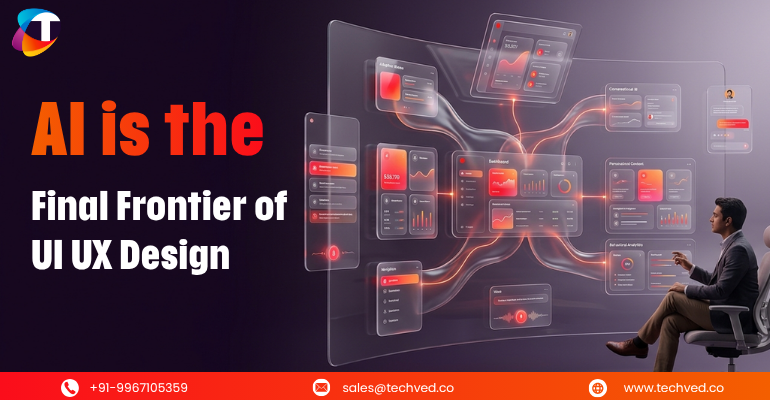
Imagine you are using a mobile banking app. You tap through five different screens to find a single transaction history report. You scroll and search while growing increasingly frustrated. This rigid experience is the reality for many users today. Digital interfaces have historically been static and unmoving. However we are standing on the edge of a revolution where AI in UI UX transforms these rigid steps into fluid experiences.
The industry is rapidly shifting toward Liquid user journeys. This concept treats every interaction as a fluid path rather than a fixed sequence of pages. An Intelligent user interface functions like a helpful assistant that learns from habits and adapts layout patterns in real time. This is the true power of AI-driven experience design. By shifting focus from manual navigation to automated paths TECHVED helps brands deliver outcomes that feel natural and intuitive.
The Limitation of Static Design
Same interface for everyone solves problems for no one.
Traditional UI UX design creates single optimal paths assuming average users. Real people vary dramatically in abilities, goals, time constraints and preferences.
Accessibility fixes add complexity. Mobile versions lag desktop in capability. Different user segments need different experiences yet share identical interfaces.
AI in UI UX solves this through interfaces that adapt dynamically rather than trying to serve everyone equally from unchanging screens.
What Are Liquid User Journeys?
Liquid user journeys are fluid adaptive paths that morph to each user's context intent and history. Unlike rigid click-through flows, liquid journeys reshape themselves in real time.
An intelligent user interface powered by AI in UI UX does not present the same menu to everyone. It highlights the action you take most often. It pre-fills forms with your patterns. It surfaces information before you search.
Anticipatory design takes this further. The interface predicts what you need next and offers it proactively. No clicks. No typing. Just seamless completion.
From Reactive to Proactive: The AI Shift
Traditional UI UX is reactive. User clicks. System responds. This works for simple tasks but fails for complex journeys.
AI-driven experience design introduces three new capabilities:
- Pattern recognition- The system learns your habits across sessions. It knows you check weather before commuting and book flights on Tuesdays.
- Context awareness- Time, location, device and even emotional state (via voice or text sentiment) influence interface behavior.
- Predictive action- The system performs tasks on your behalf with your approval. "Book my usual train for tomorrow morning" becomes a single confirmation.
Predictive UX vs. reasoning-centric design represents an evolution. Pure prediction (this user always does X) can feel creepy or wrong. Reasoning-centric design adds a layer of understanding. The AI asks: "I see you usually book a window seat. This flight has window seats available. Shall I book one?" This is human-centric AI innovation at work.
Personalization at Scale
For years, personalization at scale was a marketing fantasy. You cannot hand-craft individual journeys for millions of users.
AI in UI UX makes it possible. Machine learning models segment users into micro-personas based on behavior instead of demographics. Then intelligent user interface components adapt in real time:
- Navigation menus reorder based on your most-used features
- Dashboard widgets show metrics you actually monitor
- Form fields pre-populate with your historical entries
- Error messages explain problems in terms you understand
- Help content anticipates your next question
This is not personalization as "Hello [Name]". It is functional personalization that removes friction before you feel it.
The Shift from Static to Liquid: What Changes
The evolution from Old to AI-Driven user experience is characterized by the following shifts:
- Menus: Moving from a "same menu for all" structure to adaptive menus based on specific user behavior.
- Forms: Replacing manual form filling with predictive auto-completion.
- Error Handling: Shifting from reactive error handling to proactive guidance.
- User Journeys: Transitioning from fixed, pre-determined maps to real-time path optimization.
- Personalization: Changing from batch personalization to continuous, ongoing adaptation.
Liquid user journeys mean the interface is never the same twice for the same person. It evolves as you evolve.
Real-World Applications
E-commerce- A returning customer sees recently viewed items plus complementary products. Checkout pre-fills shipping address and preferred payment method. One-click reorder for subscriptions.
Healthcare- A patient portal surfaces appointment reminders medication refills and test results based on personal schedule. The intelligent user interface learns which notifications you ignore and adjusts frequency.
Enterprise SaaS- A project management tool adapts its interface for each role. Developers see code commits and CI/CD status. Managers see timelines and resource allocation. The same software feels custom-built for each user.
Travel- A booking app learns you prefer aisle seats, vegetarian meals and hotels with gyms. It presents only relevant options. Anticipatory design suggests trips during your typical vacation windows.
The Role of Human-Centric AI Innovation
Human-centric AI innovation keeps the user in control. Predictive features must be explainable and reversible. Users should understand why an interface behaves a certain way and opt out of unwanted predictions.
The best AI in UI UX feels like a helpful assistant not a mind reader. It suggests. It never assumes without permission.
Partner with TECHVED for Liquid Journeys
At TECHVED we design AI-driven experience design that transforms static interfaces into adaptive liquid user journeys. Our human-centric AI innovation approach ensures technology serves people not the reverse. We build intelligent user interfaces that learn adapt and delight.
Ready to move beyond static screens? Connect with us for smoother user experiences.
FAQs
What are liquid user journeys? Liquid user journeys are fluid adaptive paths that change in real time based on user context, intent and history. They replace rigid click-through flows with dynamic personalized experiences powered by AI in UI UX.
What is anticipatory design? Anticipatory design predicts user needs and offers proactive solutions before the user asks. It uses AI in UI UX to reduce decision friction and speed up task completion.
How does AI enable personalization at scale? Personalization at scale uses machine learning models to segment users into micro-personas based on behavior. Intelligent user interface components then adapt menus, forms and content for each individual.
What is the difference between predictive UX and reasoning-centric design? Predictive UX forecasts user actions based on patterns. Reasoning-centric design adds understanding of why patterns exist, making predictions more accurate and less intrusive.
Why choose TECHVED for AI-driven UI UX? TECHVED delivers human-centric AI innovation and AI-driven experience design that turn static screens into liquid user journeys. We balance intelligence with user control and trust.
Most Popular
Beyond Translation: Using BHAASHA to Build Cultural Trust
Hyper-Localization: Speaking the Customer Language for Global Growth
Touching the Next Billion: Designing for Permanent and Situational Disability

Boosting Conversion by 40%: The Intersection of AI and Conversion Rate Optimization
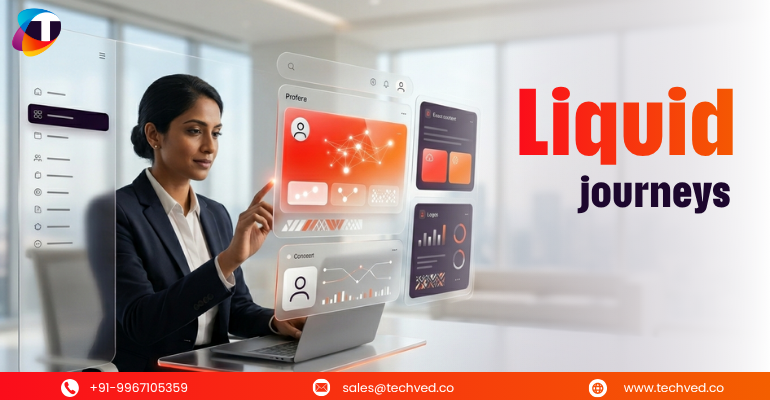
Liquid Journeys: Designing Interfaces that Watch, Listen, and Adapt
Language AI Platforms: How Businesses Scale Across Diverse Linguistic Markets
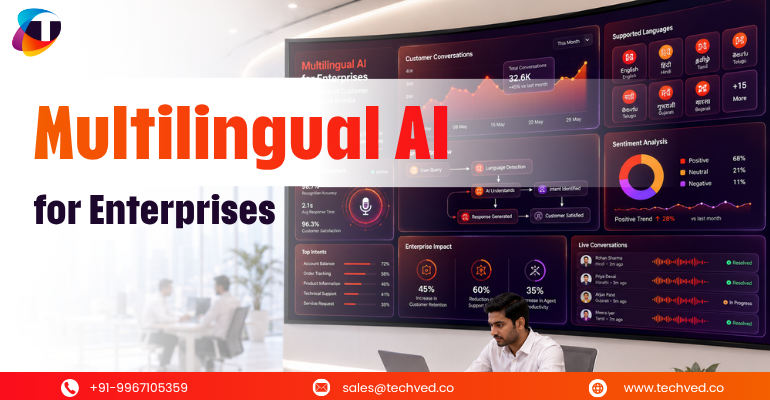
Multilingual AI for Enterprises: The Future of Customer Experience in India
Written By
Jay Anthony
Marketing Head
He led efforts to develop a fully integrated marketing communications plan and growing team. He is responsible for successful corporate re-brand and update of all branded assets.

Stay up-to-date with
all new market trends and
happenings
 #MultilingualDigitalTransformation #CulturalTrust #BHAASHA
Beyond Translation: Using BHAASHA to Build Cultural Trust
#BHAASHA #HyperLocalization #GlobalGrowth
Hyper-Localization: Speaking the Customer Language for Global Growth
#InclusiveInnovation #AccessibilityFirst #UniversalDesign
Touching the Next Billion: Designing for Permanent and Situational Disability
From Ideation To Digital Transformation
We take care of all your needs