
- Home
- Services
- Automated Translation
- TECHVED AI
- Case studies
- CLIENTS
- More

Let's get started
We believe in advancing your business growth with innovative ideations and strategies
Get In Touch


Choose Language / भाषा चुनें
Please select your preferred language
 Back
BackLiquid Journeys: Designing Interfaces that Watch, Listen, and Adapt
#AIinUIUX #AdaptiveDesign #FluidExperience

Jay Anthony
2 June 2026 | 8 min read
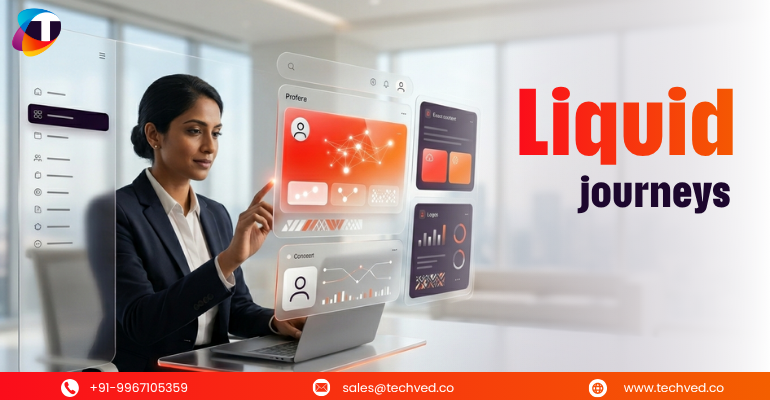
Imagine walking into a room where the lighting adjusts to your mood and the temperature shifts to match your preference the moment you step inside. You do not need to fumble for switches or thermostats. This seamless harmony is exactly what we aim for with modern digital interfaces.
We are moving away from static layouts toward dynamic experiences powered by AI in UI UX . A liquid journey is not just a trend: it is a fundamental shift toward interfaces that watch, listen and adapt to user needs.
Defining Liquid Journeys
Liquid journeys represent the evolution of digital interaction. They are fluid digital experiences that reshape themselves based on user context, behavior and intent. Unlike static interfaces with fixed menus and buttons, liquid journeys morph continuously.
At their core is context-aware UI design. Instead of forcing users to navigate through rigid menus, these interfaces understand the context of the interaction.
If a user is analyzing financial data, the interface prioritizes charts. If they are inputting data, it optimizes for entry speed. By leveraging real-time UI adaptation based on user behavior, systems can predict what a user needs before they ask for it.
How Interfaces Watch Learn and Adapt
Modern AI in UI UX uses three sensing layers:
- Watch- The interface tracks your clicks, scrolls, dwell time and navigation paths. It notices which features you ignore and which you use daily.
- Listen- Voice interfaces capture speech patterns and sentiment. Text inputs reveal intent. Even silence (time spent staring) signals confusion.
- Adapt- Machine learning models process this data and reconfigure the interface. Menus reorder. Buttons resize. Content re-prioritizes. Help appears before you ask.
Key Principles of Fluid User Experience Design
Fluid user experience design principles guiding intentions and outcomes:
Multimodal Interface Design
Modern users switch between touch and voice and gaze without thinking. Multimodal interface design enables seamless transition across input methods:
• Voice commands while driving that shift to touch when you park
• Gesture controls in sterile environments where touch is impractical
• Eye tracking that scrolls content while your hands hold equipment
• Haptic feedback that confirms actions when screens are invisible
These modalities combine into unified experiences rather than fragmented features.
Real-Time UI Adaptation Based on User Behavior
Real-time UI adaptation based on user behavior happens in milliseconds. Heatmaps and click patterns and scroll velocity feed machine learning models that restructure layouts instantly. If users consistently abandon a form field it shrinks or relocates. If a new feature sees rapid adoption it earns prominence. The interface behaves like a living organism responding to stimuli.
Enhancing Enterprise Productivity
The impact of these technologies is most visible in high complexity environments. Organizations often struggle with software that is bloated and difficult to navigate. This is where adaptive UX for enterprise applications changes the game. By deploying intelligent agents that filter noise and highlight actionable insights teams can stop wasting time on manual configuration. At TECHVED we specialize in building these responsive ecosystems that streamline operations and drive efficiency.
Challenges and Considerations
AI in UI UX for liquid journeys requires careful design. Too much adaptation feels creepy. Too little feels useless. The balance lies in transparency and user control.
Privacy is paramount. Behavioral data must be anonymized and stored securely. Users should opt into advanced personalization.
Partner with TECHVED for Liquid Journeys
At TECHVED , we design liquid journeys powered by AI in UI UX. Our context-aware UI design and adaptive UX for enterprise applications help you build interfaces that watch, listen and adapt. We deliver intelligent interface personalization that feels like magic but respects user agency.
Ready to transform static screens into liquid journeys? Connect with us today!
FAQs
What is AI in UI UX?
It is the application of artificial intelligence to interface and experience design creating systems that adapt and predict and personalize based on user context and behavior.
How does context-aware UI design work?
It uses sensors and data signals like location and time and device type to automatically adjust interface elements. Context-aware UI design reduces cognitive load by surfacing relevant options and hiding irrelevant ones.
What makes adaptive UX for enterprise applications valuable?
It personalizes complex software for different roles without requiring separate builds. Adaptive UX for enterprise applications increases adoption and reduces training costs.
What is multimodal interface design?
It enables interaction through multiple channels like voice and touch and gesture and gaze. Multimodal interface design ensures users can engage naturally across diverse contexts and abilities.
How can businesses implement real-time UI adaptation based on user behavior?
Start with behavioral analytics to identify patterns. Deploy machine learning models to predict intent. Use component-based architectures that support dynamic reconfiguration. Test continuously with real users.
Most Popular
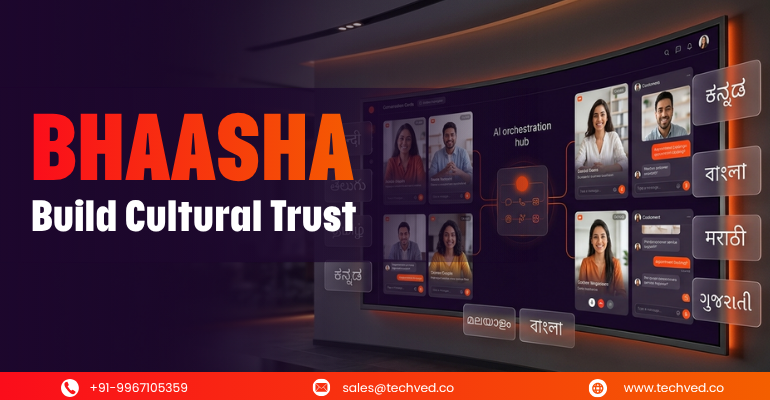
Beyond Translation: Using BHAASHA to Build Cultural Trust
Hyper-Localization: Speaking the Customer Language for Global Growth
Touching the Next Billion: Designing for Permanent and Situational Disability

Boosting Conversion by 40%: The Intersection of AI and Conversion Rate Optimization
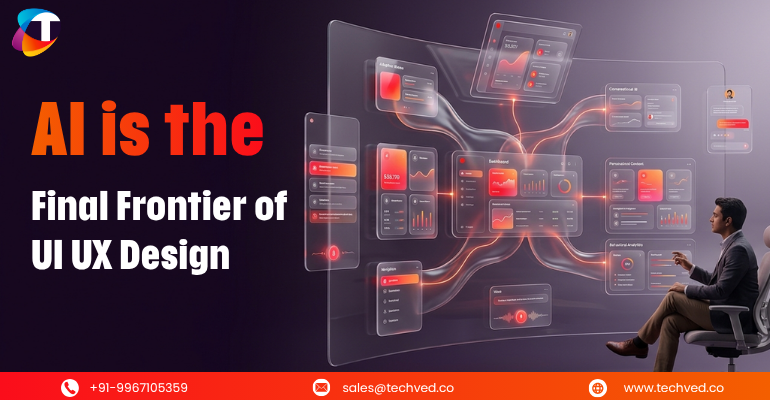
From Static Screens to Liquid Journeys: Why AI is the Final Frontier of UI UX Design
Language AI Platforms: How Businesses Scale Across Diverse Linguistic Markets
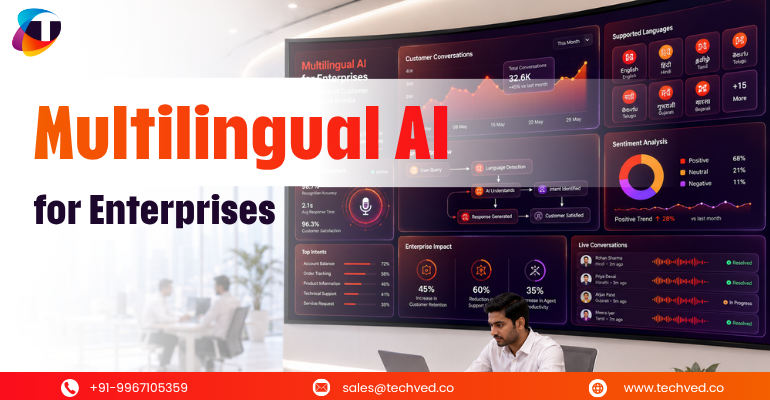
Multilingual AI for Enterprises: The Future of Customer Experience in India
Written By
Jay Anthony
Marketing Head
He led efforts to develop a fully integrated marketing communications plan and growing team. He is responsible for successful corporate re-brand and update of all branded assets.

Stay up-to-date with
all new market trends and
happenings
 #MultilingualDigitalTransformation #CulturalTrust #BHAASHA
Beyond Translation: Using BHAASHA to Build Cultural Trust
#BHAASHA #HyperLocalization #GlobalGrowth
Hyper-Localization: Speaking the Customer Language for Global Growth
#InclusiveInnovation #AccessibilityFirst #UniversalDesign
Touching the Next Billion: Designing for Permanent and Situational Disability
From Ideation To Digital Transformation
We take care of all your needs